
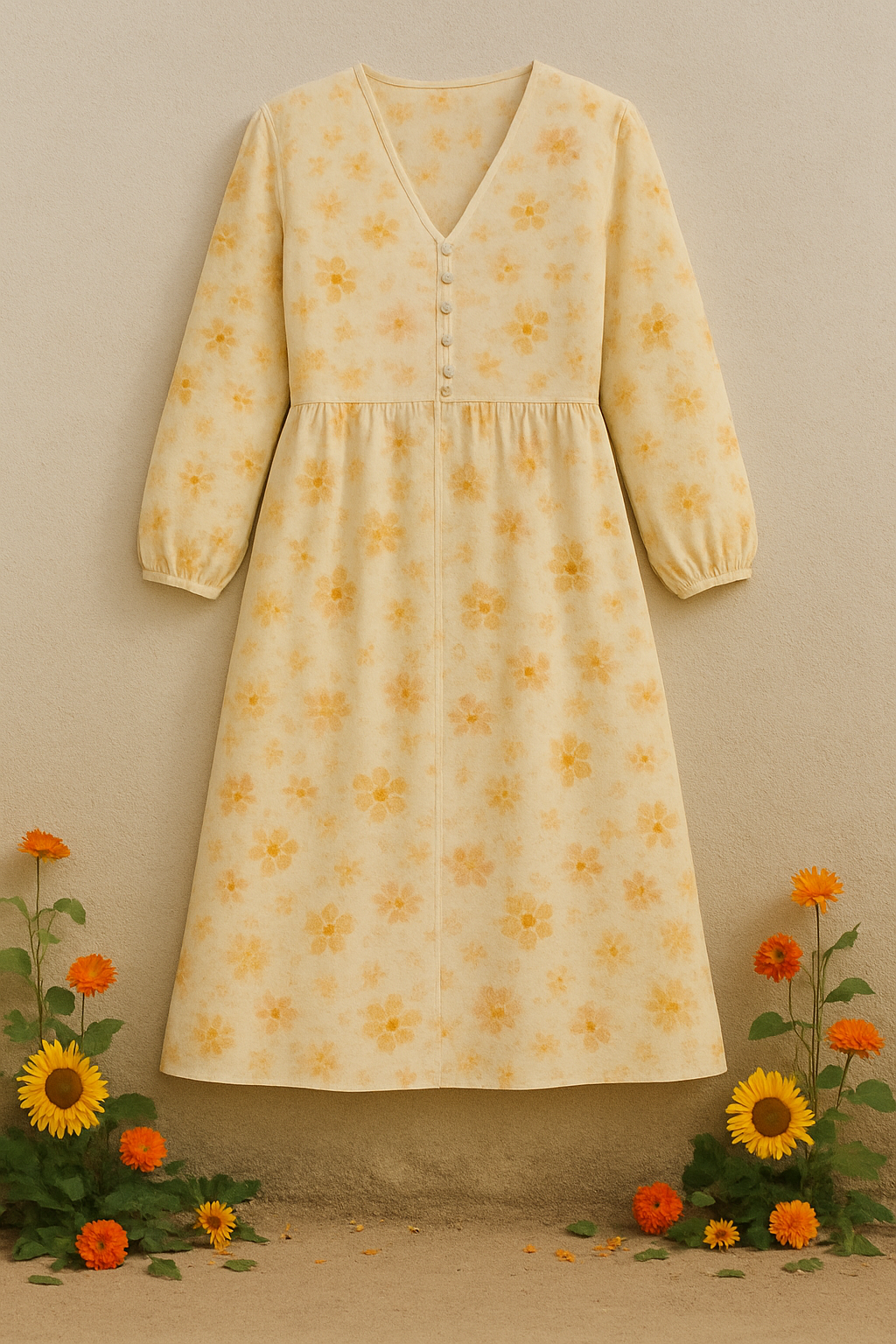
In an age where fast fashion dominates wardrobes and synthetic dyes silently pollute rivers, a gentle revolution is blooming—clothing made from 100% natural fabrics dyed using flowers. This enchanting intersection of sustainability, artistry, and ancient wisdom is redefining how we dress and express ourselves.
🌼 What Are Flower-Dyed Natural Fabrics?
Flower-dyed fabrics are exactly what they sound like: textiles made from natural fibers like cotton, linen, hemp, or silk, colored using pigments extracted from flowers. Marigolds, roses, hibiscus, indigo, and even waste temple flowers find new life as natural dyes. The result? Garments that are not only beautiful but also biodegradable, breathable, and chemical-free.
🌸 Why Choose Flower-Dyed Clothing?
1. Zero Toxins:
Unlike synthetic dyes, which are often petroleum-based and full of heavy metals, flower dyes are non-toxic and skin-friendly—perfect even for sensitive skin.
2. Earth-Friendly:
Synthetic dyeing contributes to about 20% of global water pollution. In contrast, flower dyeing uses low-impact methods, often reusing waste flowers from temples or florists, thereby reducing both waste and water contamination.
3. Unique Aesthetics:
Natural dyeing never creates identical patterns or shades. Every piece is a one-of-a-kind work of art, rich in earthy tones and organic variations.
4. Cultural Revival:
Flower dyeing revives ancient dyeing techniques like eco-printing and bundle dyeing, celebrating craftsmanship and traditional knowledge.
🌿 The Process: From Bloom to Blouse
-
Collecting Flowers: Often from temple offerings or gardens.
-
Preparing the Fabric: Natural fabrics are scoured and mordanted to prepare for dye absorption.
-
Extracting the Dye: Flowers are soaked, simmered, or steam-pressed to release their pigments.
-
Dyeing the Fabric: Techniques like bundle dyeing or eco-printing imprint petals directly onto the cloth.
-
Fixing the Color: Natural fixatives like alum or vinegar help set the colors in place.
The result is a soulful garment that carries the essence of nature and the energy of the maker’s hands.
🌼 Who’s Wearing Flower-Dyed Fashion?
From mindful consumers and eco-conscious influencers to yoga teachers and brides seeking sustainable wedding attire, flower-dyed clothing is gaining fans across the globe. Fashion brands—especially those rooted in India, Bali, and California—are embracing this practice to offer slow, sustainable style.
🌻 Final Bloom: A Future Rooted in Nature
As fashion evolves, it’s time to ask: Can beauty exist without harm? Flower-dyed clothes whisper a soft but powerful yes. They are proof that sustainability doesn’t mean sacrificing style—it means redefining it.
So the next time you wrap yourself in a flower-dyed kurta, scarf, or dress, remember: you’re not just wearing a piece of clothing—you’re wearing a piece of Earth, art, and intention.